
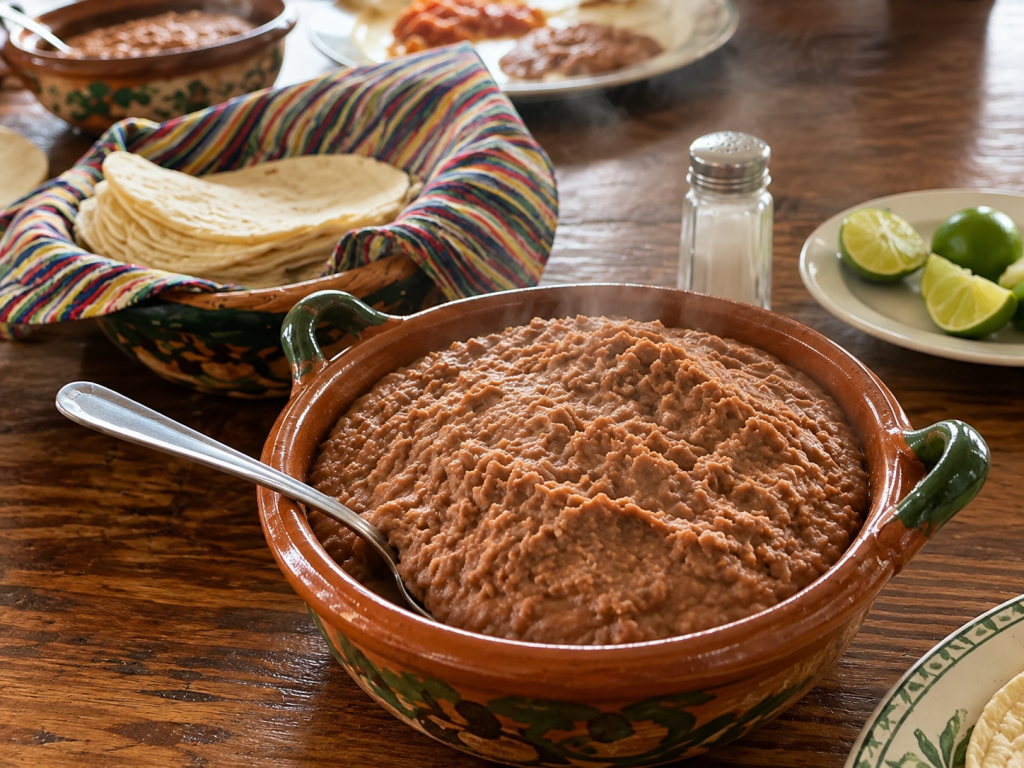
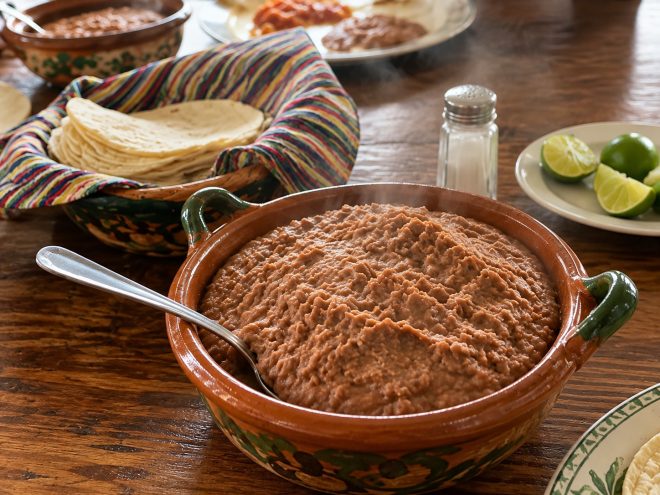
Traditional Mexican Refried Beans (Frijoles Refritos)
Authentic Mexican-style refried beans made from yesterday’s pot beans, with traditional manteca, flavorful bean broth, and the time-honored technique of frying and mashing.
Description
There is a common misconception about refried beans: that they are beans fried once, then fried a second time. Despite their English name, that is not necessarily how traditional Mexican refried beans are prepared.
The Spanish name, frijoles refritos, is often misunderstood. In this culinary context, refritos refers to beans that are thoroughly or well-fried, rather than necessarily fried twice.
The distinction is important. Traditional refried beans begin as ordinary pot beans—frijoles de la olla—that have been simmered until tender and properly seasoned. These cooked beans are then fried in hot fat, mashed, and stirred until they develop their characteristic creamy texture and rich flavor.
Boiling beans is not frying them. The fact that the beans have already been cooked does not mean they have already been fried.
This is why yesterday’s beans make such an excellent starting point. A pot of well-seasoned beans can be transformed into a completely different dish using only a few additional ingredients and the proper technique.
The secret is not an elaborate combination of spices or seasonings. It is allowing the beans to fry in the fat, incorporating their flavorful cooking broth, and knowing when to stop cooking.
The finished beans should be rich, creamy, and cohesive, with enough body to hold their shape while remaining soft enough to spoon onto a plate or spread across a warm tortilla.
Recipe Information
Ingredients
3 cups cooked pinto beans, preferably refrigerated overnight
Approximately 1 cup reserved bean cooking broth, divided, as needed
3 tablespoons rendered pork lard (manteca)
2 tablespoons finely minced white onion, optional
Salt, to taste, only if necessary
Instructions
Prepare the Skillet
1. Place a wide, heavy-bottomed skillet over medium heat. A light-colored or white enamel skillet is particularly helpful because it allows you to observe the cooking fat and recognize any developing browning. Preheat the skillet to an approximate surface temperature of 300–325°F (149–163°C).
2. Add the lard and allow it to melt completely. Aim for a fat temperature of approximately 275–325°F (135–163°C). The fat should shimmer gently without smoking.
3. If using onion, add it to the melted lard and cook for approximately 2 minutes, stirring occasionally, until softened, translucent, and pleasantly sweet-smelling. Avoid allowing the onion to burn or become deeply browned.
Fry the Beans Before Mashing
4. Add the cooked pinto beans with approximately 1/4 cup of their reserved cooking broth. Spread them evenly across the skillet.
5. Allow the beans to fry briefly, approximately 1–2 minutes, before beginning to mash them. The beans should sizzle gently in the hot fat. This initial frying stage is an important part of developing the characteristic flavor of refried beans.
6. Using a bean masher, potato masher, or sturdy wooden spoon, begin mashing the beans directly in the skillet. Work them into the hot fat until they reach your preferred texture. For rustic refried beans, leave some beans partially intact. For a smoother preparation, mash more thoroughly.
Develop the Creamy Consistency
7. Gradually incorporate additional reserved bean broth, approximately 2–3 tablespoons at a time, stirring after each addition. Adjust the burner to maintain a gentle simmer. The moist bean mixture will generally remain near 195–212°F (91–100°C) while simmering.
8. Continue cooking over medium to medium-low heat, stirring frequently and scraping the bottom and sides of the skillet. The beans will gradually become thicker as excess moisture evaporates.
9. Watch for slow, heavy bubbles rising through the mixture. These indicate that the beans are concentrating and approaching the proper consistency. Reduce the heat if the beans begin sticking or scorching.
10. Draw a wooden spoon or spatula through the center of the beans. When the mixture briefly separates, exposing the skillet bottom before slowly flowing back together, the beans have reached the characteristic creamy, cohesive stage.
11. Continue frying and stirring until the desired consistency develops, approximately 8–10 minutes after the beans were first added, depending on their initial moisture content. Add a little additional broth whenever necessary to prevent excessive thickening.
Finish and Serve
12. Taste the beans before adding additional salt. If the original pot beans were properly seasoned, additional salt may not be necessary.
13. Remove the skillet from the heat while the beans are slightly looser than the desired finished consistency. They will continue thickening as they cool.
14. For an optional traditional presentation, use a spatula to fold and shape the thickened beans into a smooth, elongated, loaf-like form. Transfer carefully to an oval serving platter, sprinkle generously with crumbled queso fresco, and garnish with thinly sliced radishes. This distinctive presentation is known as el bolillo, Spanish for “the small bread roll,” because the finished mound of beans resembles the elongated shape of a traditional Mexican bolillo bread roll.
15. Serve immediately while hot and creamy.
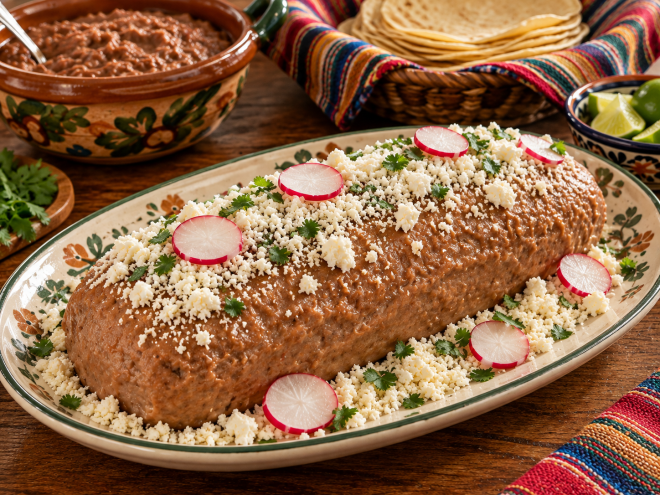
El Bolillo — A Traditional Mexican Presentation: Creamy refried beans shaped into an elongated loaf resembling a bolillo, the traditional Mexican bread roll. Finished with crumbled queso fresco and thinly sliced radishes, this distinctive presentation turns a simple, comforting dish into an elegant centerpiece for the Mexican table.
Cook’s Notes
What Refried Beans Really Are
The name frijoles refritos is frequently translated as “refried beans,” leading many people to believe the beans must be fried twice.
In traditional Mexican cooking, however, refritos can describe beans that have been thoroughly fried. The beans are first simmered until tender and then fried in fat while being mashed.
The distinction helps explain the entire technique: the objective is not to fry the same beans repeatedly, but to transform already-cooked beans into a rich, creamy preparation through frying.
Why Yesterday’s Beans Are Best
Previously cooked beans are especially convenient for refrying because they are already tender and well-seasoned.
Refrigerating them in their cooking liquid allows the seasoning to distribute throughout the beans. The reserved broth also contains dissolved starches and concentrated bean flavor, making it particularly useful for producing a creamy consistency.
The Importance of Manteca
Traditional Mexican refried beans are frequently prepared with rendered pork lard, known as manteca.
Lard provides a distinctive savory richness and contributes to the characteristic flavor of the finished beans.
Fresh rendered lard is preferable when available. Mexican butcher shops and carnicerías are often good places to find it.
Neutral vegetable oil can be substituted, although the flavor will be different.
Let the Beans Fry Before Mashing
One of the most important techniques is allowing the beans to spend a short period frying in the hot fat before they are mashed.
Immediately mashing the beans after adding them to the skillet skips this initial frying stage.
Allowing them to sizzle briefly helps distinguish properly prepared refried beans from ordinary mashed, reheated beans.
Why a White Skillet Helps
A light-colored skillet makes it easier to see the condition of the cooking fat, observe the onions, and identify any browning or scorching.
This is especially helpful when learning to prepare refried beans.
A heavy skillet also helps distribute heat more evenly.
Control the Heat Carefully
The skillet surface and cooking fat may initially be much hotter than the moist beans.
Once the beans and broth are added, the mixture will generally simmer near the boiling point of water rather than remain at the initial frying-fat temperature.
Maintain moderate heat and reduce it if the beans begin sticking or scorching.
Listen to the Beans
As moisture evaporates, the beans begin producing slow, heavy bubbles rather than a thin, watery simmer.
These bubbles are a useful indication that the mixture is thickening.
Stir carefully because thick refried beans can splatter.
The Spoon Test
Draw a wooden spoon across the bottom of the skillet.
If the beans immediately flow back into the opening, the mixture is still relatively loose.
If the opening remains visible briefly before slowly closing, the beans have developed a creamy, cohesive consistency.
If the beans remain separated and hold a very firm shape, they may be too thick for a soft, spoonable side dish.
Use Bean Broth Rather Than Water
The cooking liquid from the original beans contains flavor, starch, and seasoning.
Adding it gradually during frying helps maintain a creamy consistency without unnecessarily diluting the flavor.
If the broth has thickened or become gelatinous during refrigeration, it will loosen as it warms.
Stop Cooking Before the Beans Become Too Thick
Refried beans continue thickening after being removed from the heat.
A mixture that appears perfectly thick in the skillet may become excessively stiff by the time it reaches the table.
For soft, creamy refried beans, stop cooking while the mixture is slightly looser than the desired serving consistency.
Salt Only After Tasting
Properly seasoned pot beans may contain all the salt needed.
Because frying reduces moisture and concentrates flavor, adding salt too early can result in an overly salty finished dish.
Taste after the beans have thickened and adjust only if necessary.
Traditional Presentation: El Bolillo
The beans must be sufficiently thick to hold their shape, although they should remain creamy rather than dry or crumbly.
Serving Suggestions
These refried beans are a versatile accompaniment to many Mexican and Southwestern dishes.
Huevos Rancheros, Reimagined — Serve beneath or alongside the eggs and tortillas for a hearty Mexican-style breakfast.
Pastel Azteca — Pair with this layered Mexican casserole for a satisfying meal.
Chilitos Güeros Tatemados en Salsa Verde — The bright, tangy chile flavors complement the rich beans beautifully.
Chiles Rellenos Casserole with Hatch Peppers and Smoky Tomato-Chile Sauce — An excellent combination of creamy beans, roasted peppers, and smoky tomato flavors.
Other traditional accompaniments include Mexican rice, warm corn tortillas, enchiladas, tostadas, tacos, burritos, and grilled meats.
Beverage Suggestions
Horchata: A chilled, cinnamon-scented rice beverage that complements the richness of the beans.
Agua fresca: Watermelon, pineapple, or citrus agua fresca provides a refreshing contrast.
Mexican-style limeade: Bright acidity balances the savory flavor of the dish.
Unsweetened iced tea: A refreshing alternative that pairs well with a variety of Mexican meals.
Storage and Reheating
Refrigeration: Transfer leftover beans to a shallow, covered container and refrigerate promptly, within 2 hours of cooking. Store at 40°F (4°C) or below and consume within 3–4 days, counting from when the original beans were first cooked.
Freezing: Portion cooled beans into airtight freezer-safe containers. Freeze at 0°F (-18°C) or below for approximately 2–3 months for best quality.
Reheating: Place refrigerated beans in a skillet over medium-low heat. Add a small amount of reserved bean broth or water and stir frequently until creamy and heated to an internal temperature of 165°F (74°C) throughout.
Thawing: Thaw frozen beans overnight in the refrigerator or reheat directly from frozen over low heat, adding liquid as necessary.
Variations
Vegetarian Refried Beans
Replace the pork lard with 3 tablespoons of neutral cooking oil. Use beans originally prepared without meat or animal fat.
Rustic Refried Beans
Mash approximately three-quarters of the beans, leaving the remainder whole or partially intact for a more substantial texture.
Extra-Creamy Refried Beans
Mash the beans thoroughly and gradually incorporate additional bean broth until the mixture becomes smooth and spoonable.
Refried Black Beans
Substitute 3 cups of cooked black beans and their reserved cooking liquid. Follow the same frying and mashing technique, adjusting the broth as necessary.
Thicker Beans for Tostadas and Burritos
Continue cooking slightly longer, stirring frequently, until the beans are thick enough to spread without running. Remember that they will continue firming as they cool.


Leave a Reply