
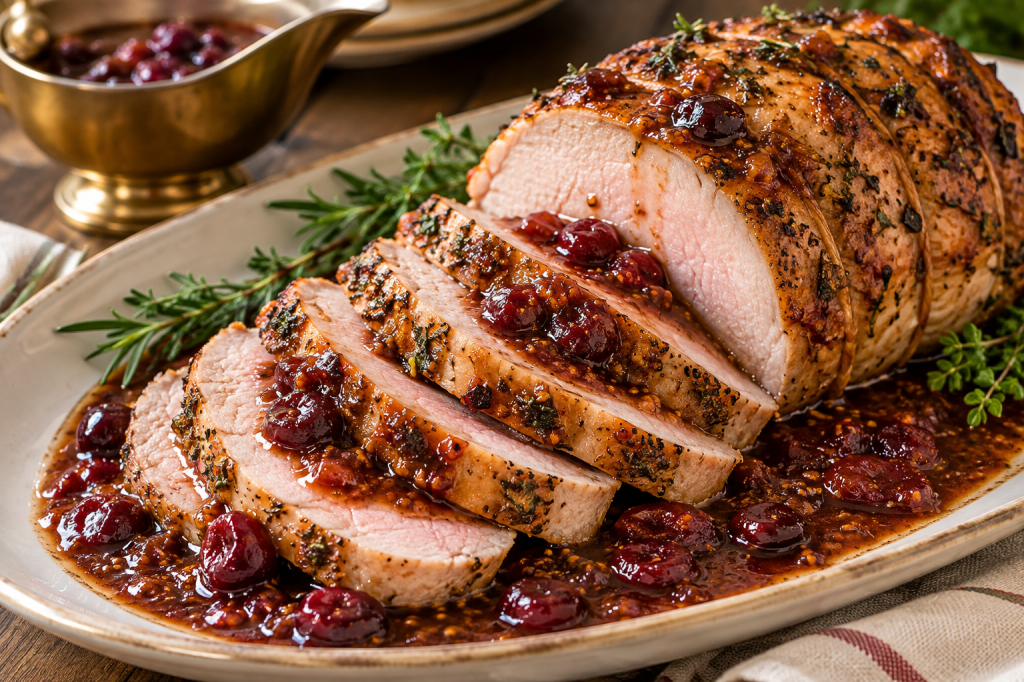
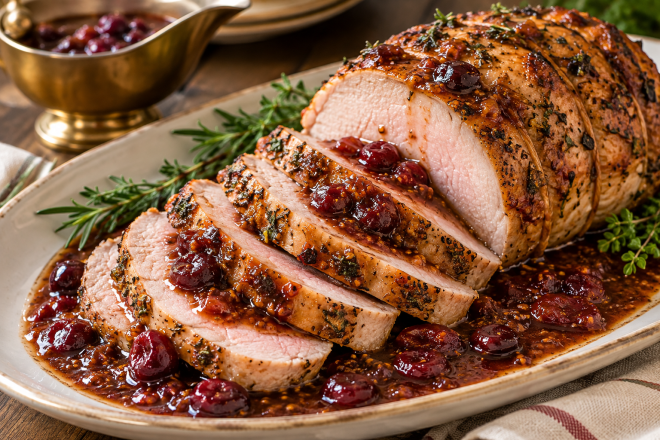
Herb-Roasted Pork Loin with Tart Cherry–Mustard Pan Sauce
An elegant, herb-crusted pork loin, roasted until tender and juicy, accompanied by a rich red wine reduction featuring tart cherries, whole-grain mustard, and fresh thyme.
Description
This beautifully roasted pork loin combines the savory flavors of garlic, rosemary, thyme, and butter with a sophisticated tart cherry–mustard pan sauce.
The pork is dry-brined to enhance its natural flavor and moisture retention, then seared to develop a golden-brown crust before being gently roasted. A fragrant herb butter adds richness while complementing the meat’s delicate flavor.
The accompanying sauce brings together dry red wine, tart cherries, shallots, Dijon mustard, and chicken stock. Reduced until glossy and finished with cold butter, the sauce achieves a pleasing balance of sweetness, acidity, and savory depth.
Ideal for holiday gatherings, Sunday dinners, or elegant entertaining, this dish delivers restaurant-quality presentation using familiar ingredients and approachable techniques.
Recipe at a Glance
Ingredients
For the Pork Loin
1 boneless center-cut pork loin roast, approximately 3–4 pounds
1 tablespoon Diamond Crystal kosher salt, or 1½ teaspoons Morton kosher salt
1 teaspoon freshly ground black pepper
2 tablespoons avocado oil or another neutral cooking oil
4 tablespoons unsalted butter, softened
4 garlic cloves, finely minced
1 tablespoon finely chopped fresh rosemary
1 tablespoon finely chopped fresh thyme
1 teaspoon finely grated lemon zest
For the Tart Cherry–Mustard Pan Sauce
1 tablespoon unsalted butter
1 medium shallot, finely minced
½ cup dried tart cherries, preferably unsweetened
¾ cup dry red wine, preferably Pinot Noir
1 cup unsalted chicken stock
1 tablespoon whole-grain Dijon mustard
1 teaspoon smooth Dijon mustard
1 teaspoon fresh thyme leaves
1–2 teaspoons red wine vinegar, as needed
1 tablespoon cold unsalted butter, cut into small pieces
Kosher salt, to taste
Freshly ground black pepper, to taste
Instructions
Prepare and Dry-Brine the Pork
1. Pat the pork loin thoroughly dry with paper towels.
2. Trim away any silver skin and excessively thick surface fat, leaving approximately ¼ inch of fat where present.
3. If the roast is unevenly shaped, tuck thinner portions inward to create a uniform cylinder.
4. Tie the roast securely with butcher’s twine at approximately 1½-inch intervals to maintain its shape during cooking.
5. Season evenly with the kosher salt and freshly ground black pepper.
6. Place the pork on a wire rack set over a rimmed baking sheet. Refrigerate uncovered for 8–24 hours.
Prepare the Herb Butter
1. Combine the softened butter, minced garlic, rosemary, thyme, and lemon zest in a small bowl.
2. Mix thoroughly until the ingredients are evenly distributed.
3. Cover and refrigerate until needed. Allow the butter to soften slightly before spreading it over the pork.
Sear the Pork
1. Remove the pork from the refrigerator while preheating the oven to 325°F.
2. Pat the pork dry if any surface moisture has accumulated.
3. Heat the avocado oil in a large oven-safe skillet over medium-high heat.
4. Add the pork and sear on all sides until deeply golden brown, approximately 2–3 minutes per side.
5. Transfer the pork to a plate and allow the surface to cool briefly.
6. Spread the prepared herb butter evenly over the top and sides of the roast.
Roast the Pork
1. Return the pork to the oven-safe skillet, preferably positioned on a small roasting rack with the fat side facing upward.
2. Insert an oven-safe meat thermometer into the thickest portion of the roast.
3. Roast at 325°F until the internal temperature reaches 145°F. Begin checking after approximately 45 minutes. Actual cooking time will depend on the roast’s thickness and the oven.
4. If the herbs begin to brown excessively, loosely cover the roast with aluminum foil.
5. Transfer the finished pork to a carving board and loosely tent with foil.
6. Allow the pork to rest for 10–15 minutes before carving.
Prepare the Tart Cherry–Mustard Pan Sauce
1. Carefully pour excess fat from the roasting skillet, leaving the flavorful browned deposits behind.
2. Place the skillet over medium heat and add 1 tablespoon unsalted butter.
3. Add the minced shallot and sauté for approximately 2 minutes, until softened and fragrant.
4. Add the dried tart cherries and red wine.
5. Stir with a wooden spoon, scraping the bottom of the skillet to release the browned deposits.
6. Simmer until the wine has reduced by approximately half.
7. Add the chicken stock and fresh thyme leaves.
8. Continue simmering until the liquid has reduced to approximately ¾–1 cup and lightly coats the back of a spoon.
9. Reduce the heat to low and whisk in the whole-grain Dijon mustard and smooth Dijon mustard.
10. Taste the sauce. If additional acidity is needed, add the red wine vinegar gradually, beginning with 1 teaspoon.
11. Remove the skillet from the heat.
12. Whisk in the cold butter, a few pieces at a time, until completely incorporated and the sauce becomes smooth and glossy.
13. Season to taste with kosher salt and freshly ground black pepper.
Carve and Serve
1. Remove the butcher’s twine from the rested pork.
2. Slice the roast across the grain into approximately ½-inch-thick slices.
3. Arrange the slices in an overlapping pattern on a warmed serving platter.
4. Spoon a small amount of the cherry-mustard sauce over the pork, distributing the softened cherries attractively.
5. Garnish with fresh thyme, if desired.
6. Serve immediately, offering the remaining sauce separately.
Cook’s Notes
Selecting the Pork: Choose a boneless center-cut pork loin roast with a relatively uniform shape. Pork tenderloin is a different cut and is not interchangeable in this recipe without adjusting the cooking method and timing.
The Importance of Dry-Brining: Salting the pork several hours before cooking allows the seasoning to penetrate the meat while improving moisture retention. Refrigerating the roast uncovered also encourages better surface browning.
Tying the Roast: Butcher’s twine helps maintain a consistent shape, encouraging more even cooking and producing attractive slices.
Searing Before Roasting: Browning the pork develops complex savory flavors through the Maillard reaction. The browned deposits remaining in the skillet also provide an excellent foundation for the pan sauce.
Herb Butter: Applying the herb butter after searing helps prevent the garlic and herbs from burning during the initial high-temperature cooking.
Temperature Control: Pork loin is relatively lean and can become dry if overcooked. Use a reliable meat thermometer and cook to an internal temperature of 145°F, followed by a rest of at least 3 minutes.
Choosing the Cherries: Unsweetened dried tart cherries provide the best flavor balance. Sweetened dried cherries can be substituted, although the sauce may require additional vinegar to balance their sweetness.
Wine Selection: Pinot Noir is particularly suitable because its acidity and restrained tannins complement the cherries and pork. Avoid heavily oaked or highly tannic red wines.
Balancing the Sauce: The finished sauce should be savory and gently tart, with enough natural sweetness from the cherries to balance the mustard. Add vinegar only after tasting.
Finishing with Butter: Whisking cold butter into the sauce off the heat creates a glossy texture and rounds out the acidity. Avoid boiling the sauce after adding the finishing butter.
Make-Ahead Preparation: The pork may be tied and dry-brined up to 24 hours in advance. The herb butter may also be prepared ahead and refrigerated. For the best texture, finish the sauce shortly before serving.
Storing Leftovers: Refrigerate leftover pork and sauce in airtight containers for up to 3–4 days. Reheat gently with a small amount of chicken stock to help prevent the pork from drying out.
Serving Suggestions
Creamy Yukon Gold Mashed Potatoes: Their buttery texture provides an ideal accompaniment for the tart cherry–mustard sauce.
Roasted Carrots with Fresh Thyme: The carrots’ natural sweetness complements the cherries while reinforcing the herbal flavors of the pork.
Green Beans Almondine: Crisp green beans, toasted almonds, and fresh lemon offer a refreshing contrast to the richness of the dish.
Wild Rice Pilaf: A mixture of wild rice, sautéed mushrooms, and shallots introduces earthy flavors and a pleasing textural contrast.
Roasted Brussels Sprouts: Deeply caramelized Brussels sprouts with a touch of balsamic vinegar pair especially well with the fruit-forward sauce.
For elegant entertaining, arrange the sliced pork on a warmed ivory platter, spoon a modest amount of sauce beneath and over the meat, and finish with a few fresh thyme sprigs. Serve the remaining sauce in a separate sauceboat.
Beverage Suggestions
Pinot Noir: An excellent pairing. Its red-fruit character, moderate tannins, and bright acidity complement the tart cherries and roasted pork.
Dry Riesling: A crisp Riesling provides refreshing acidity that balances the richness of the herb butter and mustard sauce.
Dry Rosé: A Provençal-style rosé offers subtle fruit notes and a clean finish, making it particularly suitable for spring or summer entertaining.
Tart Cherry and Rosemary Spritzer: For a nonalcoholic option, combine unsweetened tart cherry juice with sparkling water, a squeeze of fresh lemon, and a lightly bruised rosemary sprig.
Recipe Categories
Primary Category: Main Courses
Additional Categories: Pork, American Cuisine, Oven Roasting, Holiday Meals, Sunday Dinner, Entertaining
Cooking Difficulty: Intermediate
Recipe Cost: Premium


Leave a Reply