
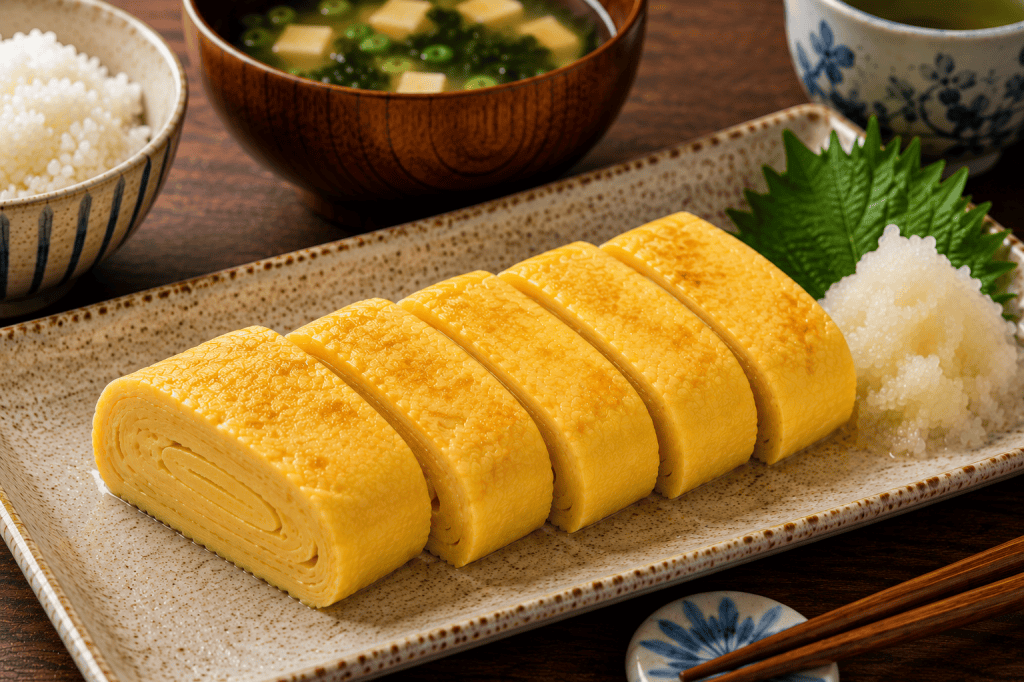
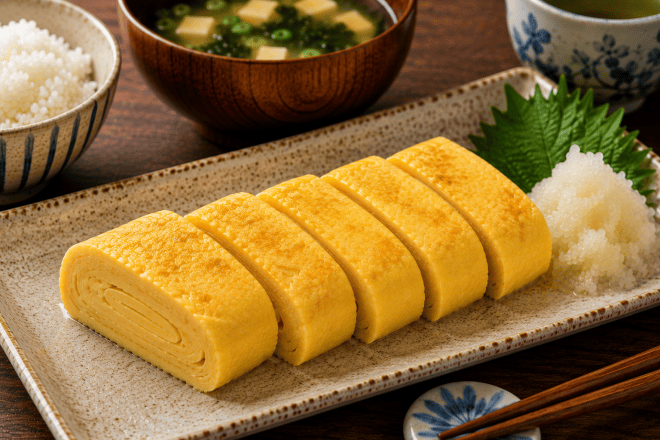
Tamagoyaki is a classic Japanese rolled omelet made by cooking seasoned eggs in thin layers and rolling them together to create a tender, delicate texture. This version uses Ninben Shiro Dashi for bonito-rich umami and delicate Japanese seasoning, while a small amount of potato starch improves moisture retention and elasticity, helping the layers roll without tearing.
This recipe is specifically developed for the HexClad Japanese Egg Pan and temperature-controlled cooking on the Breville Control Freak.
Ingredients
- 3 large eggs
- 2 teaspoons Ninben Shiro Dashi
- 3 tablespoons cold water
- 1/2 teaspoon potato starch
- 1/2 teaspoon granulated sugar
- Neutral oil, as needed for greasing
Instructions
- In a small bowl or measuring cup, whisk the potato starch into the cold water until completely dissolved. Add the Shiro Dashi and sugar and stir until the sugar dissolves.
- Crack the eggs into a medium bowl. Gently break up the yolks and mix the eggs with chopsticks or a whisk. Avoid whipping or incorporating excessive air.
- Add the Shiro Dashi mixture to the eggs and gently stir until evenly combined.
- Strain the mixture through a fine-mesh sieve into a measuring cup with a pouring spout.
- Fold a paper towel into a small square and lightly saturate it with neutral oil.
- Preheat the HexClad Japanese Egg Pan on the Breville Control Freak to 280°F. Wipe the cooking surface with the oiled paper towel, leaving only a very thin film of oil.
- Gently stir the egg mixture immediately before each pour to redistribute the potato starch, which will gradually settle.
- Pour just enough egg mixture into the pan to cover the bottom in a thin, even layer. Immediately tilt the pan as necessary to distribute the egg. Pierce any large bubbles.
- Cook until the egg is set underneath but the surface remains moist and slightly glossy. Do not allow the surface to become completely dry.
- Roll the egg toward you, then push the completed roll to the far end of the pan.
- Lightly wipe the exposed cooking surface with the oiled paper towel.
- Gently stir the egg mixture and pour in enough to create another thin layer. Lift the existing roll slightly so some of the uncooked egg flows underneath it.
- Once the new layer is set underneath but remains moist and slightly glossy on top, roll the existing omelet toward you, wrapping it in the new layer.
- Push the roll to the far end, lightly oil the exposed pan, and repeat until all the egg mixture has been used, aiming for approximately four thin layers.
- After completing the final roll, gently press and turn the tamagoyaki as needed to square the exterior. Cook each broad side for only 5–10 seconds, just long enough to set the shape without drying the interior.
- Transfer the tamagoyaki to a bamboo sushi mat and gently compress it into a neat rectangular roll.
- Rest for 3–5 minutes, then unwrap and slice crosswise into six pieces.
Cook’s Notes
- Always dissolve the 1/2 teaspoon potato starch completely in cold water before combining it with the eggs. Adding potato starch directly to the eggs can produce lumps.
- Potato starch improves elasticity, moisture retention, and cohesion without making the finished tamagoyaki noticeably firm or gummy.
- Potato starch settles quickly. Gently stir the egg mixture immediately before every pour.
- Do not add additional soy sauce or mirin. Ninben Shiro Dashi supplies the dashi, soy sauce, salt, umami, and some sweetness needed for the recipe.
- 280°F is the starting temperature for the Breville Control Freak. Judge doneness primarily by appearance rather than time. If the egg browns before it is ready to roll, reduce the temperature to 275°F.
- Aim for approximately four thin layers, but don’t divide the mixture into exact quarters. The amount needed for each layer changes as the roll grows.
- Roll each layer while its upper surface remains moist and slightly glossy. This allows the next layer to bond to it and helps prevent separation when sliced.
- Apply only a very thin film of oil between layers. Excess oil can interfere with adhesion.
- The 1/2 teaspoon sugar produces a subtly sweet tamagoyaki. Omit it for a more savory version or increase it to 1 teaspoon for a sweeter preparation.
- Straining the egg mixture produces smoother, more uniform layers and removes chalazae and any remaining starch clumps.
- A bamboo sushi mat helps gently compress the warm tamagoyaki into a uniform rectangular shape without overcooking it.
Serving Suggestions
- Serve warm or at room temperature with steamed Japanese rice and miso soup.
- Serve with grated daikon for a traditional accompaniment.
- Add to a bento with steamed rice and Japanese pickles.
- Pair with grilled salmon or other simply seasoned fish.
- Serve alongside a light cucumber or seaweed salad.
Beverage Suggestions
- Sencha
- Genmaicha
- Hojicha
- Unsweetened iced green tea
- Sparkling water with lemon


Leave a Reply