
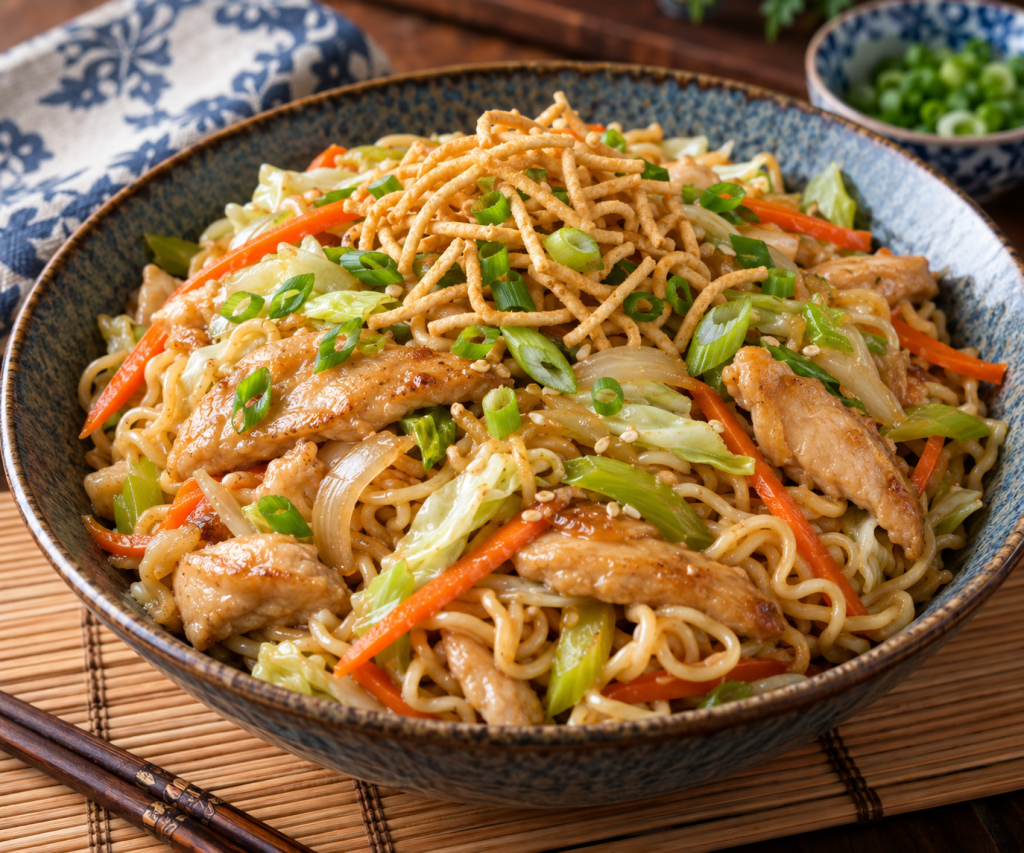
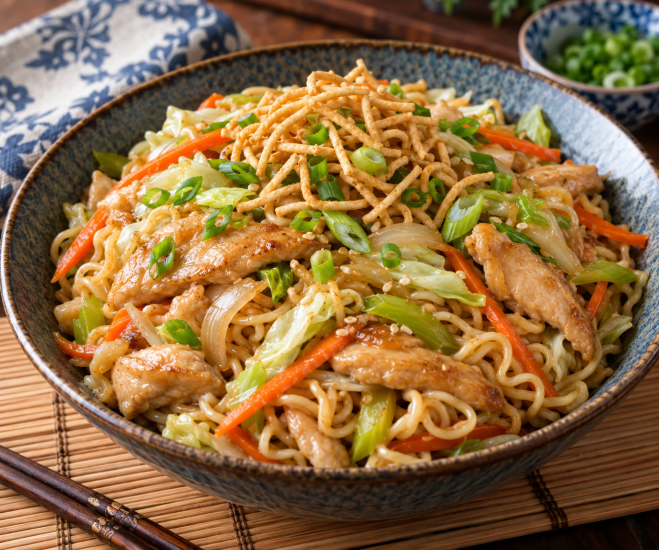
Inspired by the original Quick Chicken and Noodles Stir-Fry recipe from Rene Carter’s Kitchen, this updated version uses the Chinese technique of velveting to create exceptionally tender, silky chicken. A light cornstarch marinade helps the chicken retain moisture during stir-frying, while crisp vegetables and tender ramen noodles are tossed in a savory, glossy sauce. Cooking the chicken separately from the vegetables ensures that every ingredient retains its ideal texture.
Ingredients
For the Velveted Chicken
6 boneless, skinless chicken thighs, approximately 1 1/2 pounds
1 1/2 tablespoons cornstarch
1 1/2 tablespoons cold water
1 1/2 teaspoons light soy sauce
1 1/2 teaspoons canola oil
For the Stir-Fry
2 packages (3 ounces each) chicken-flavored ramen noodles, seasoning packets reserved
2 tablespoons canola oil, divided
1 medium onion, thinly sliced
1 cup carrots, thinly sliced
2/3 cup celery, thinly sliced
2 cups cabbage, thinly sliced
2 cloves garlic, minced
1/3 cup low-sodium chicken broth, warmed
1 teaspoon Viet Huong Fish Sauce (optional)
Wide, crispy Oriental noodles, for garnish (optional)
2 green onions, thinly sliced, for garnish (optional)
Instructions
Prepare the Velveted Chicken
- Trim any excess fat from the chicken thighs and cut the meat into thin, approximately 1/4-inch slices.
- Place the chicken in a medium bowl. Add the cold water and soy sauce, tossing until the chicken absorbs most of the liquid.
- Sprinkle the cornstarch over the chicken and toss until every piece is evenly coated. Add the canola oil and mix thoroughly.
- Cover and refrigerate for 15–20 minutes while preparing the noodles and vegetables.
Prepare the Noodles
- Bring a medium saucepan of water to a boil. Add the ramen noodles, reserving the seasoning packets. Cook for approximately 2 minutes, stirring gently to separate the noodles. Drain and set aside. Do not overcook, as the noodles will finish cooking in the stir-fry.
Cook the Chicken
- Heat 1 tablespoon of canola oil in a large skillet or wok over medium-high heat.
- Add half of the marinated chicken in a single layer. Allow it to cook briefly before gently turning and stir-frying until fully cooked and the thickest pieces reach an internal temperature of 165°F. Transfer to a clean plate.
- Repeat with the remaining chicken, adding a small amount of additional oil if necessary. Remove the cooked chicken from the skillet and set aside.
Stir-Fry the Vegetables
- Add the remaining canola oil to the skillet. Add the onion and carrots and stir-fry for approximately 2 minutes.
- Add the celery and continue stir-frying for approximately 1 minute.
- Add the cabbage and garlic. Stir-fry for another 1–2 minutes, until the vegetables are tender-crisp and the garlic is fragrant.
Combine and Finish
- In a small bowl, combine the warmed chicken broth, the contents of 1 reserved ramen seasoning packet, and the fish sauce, if using. Stir until the seasoning dissolves.
- Return the cooked chicken and any accumulated juices to the skillet. Add the drained ramen noodles and prepared broth mixture.
- Toss gently over medium-high heat for approximately 1–2 minutes, until everything is heated through and the noodles and chicken are evenly coated with a light, glossy sauce.
- Taste and add a small amount of the remaining ramen seasoning if additional flavor is needed. Add a splash of warm chicken broth if the noodles appear dry.
- Transfer to a serving dish and garnish with crispy Oriental noodles and sliced green onions, if desired. Serve immediately.
Cook’s Notes
Velveting Technique: The combination of cornstarch, water, soy sauce, and oil creates a thin protective coating that helps the chicken retain moisture during cooking. Allow the chicken to marinate for at least 15 minutes for the best results.
Chicken Substitutions: Boneless, skinless chicken breasts may be substituted for the chicken thighs. Slice the breasts thinly against the grain and follow the same velveting procedure. Chicken breast particularly benefits from this technique because it contains less fat and can become dry during high-heat cooking.
Cooking in Batches: Avoid overcrowding the skillet when cooking the chicken. Cooking in smaller batches allows the meat to cook evenly without releasing excessive moisture and steaming in the pan.
Additional Vegetables: Add one drained can of sliced water chestnuts along with the celery for extra crunch. Thinly sliced bell peppers, snow peas, or mushrooms may also be added.
Seasoning Adjustments: Begin with one ramen seasoning packet and adjust to taste. The soy sauce and optional fish sauce contribute additional sodium, so the second seasoning packet may not be necessary.
Fish Sauce: Viet Huong Fish Sauce adds savory depth and complexity. Start with 1 teaspoon and adjust to taste. Avoid adding the larger quantity suggested in the original recipe variation without first tasting the finished sauce.
Noodle Preparation: Slightly undercook the ramen noodles before adding them to the skillet. They will absorb additional liquid and finish cooking when tossed with the chicken, vegetables, and sauce.
Sauce Consistency: The cornstarch coating on the chicken will lightly thicken the broth during the final cooking stage. Add a small amount of additional warm chicken broth if a looser sauce is desired.
Serving Suggestions
Serve immediately while the vegetables remain crisp and the chicken is tender. Garnish with sliced green onions, toasted sesame seeds, or crispy Oriental noodles for additional flavor and texture.
For a more substantial meal, accompany with steamed edamame, cucumber salad, or vegetable spring rolls.
Beverage Suggestions
Serve with chilled jasmine tea, unsweetened iced green tea, or sparkling water with a squeeze of fresh lime.


Leave a Reply