
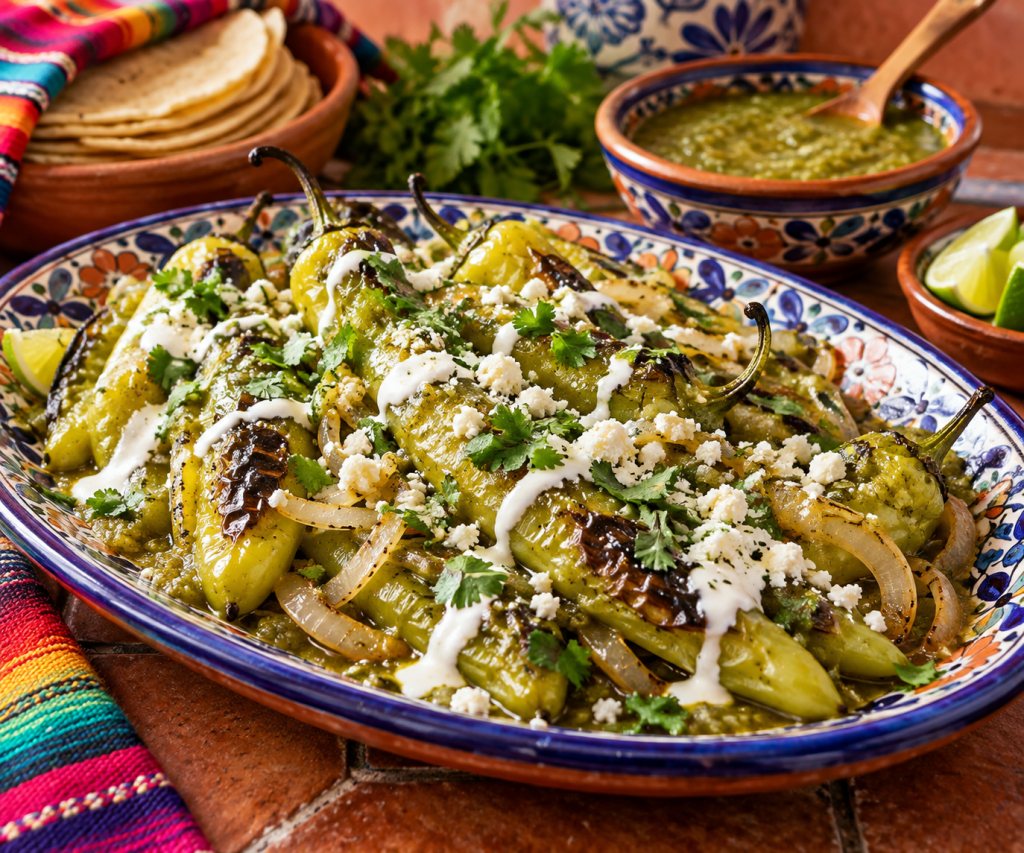
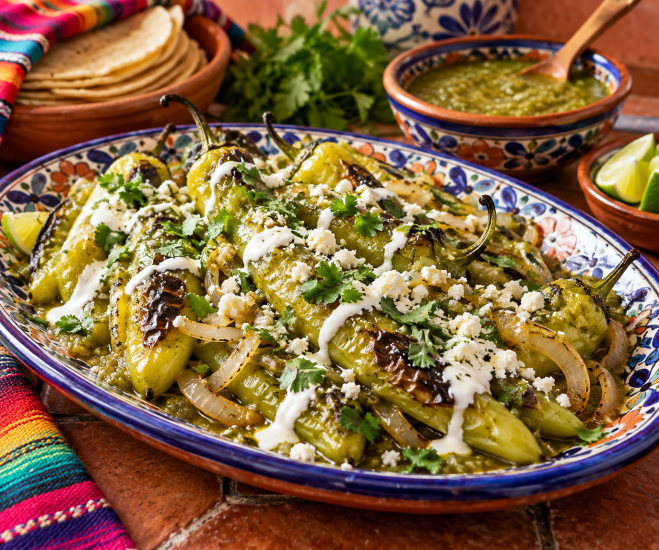
Blistered Mexican Yellow Chiles with Fire-Roasted Tomatillo Salsa
Tender, blistered güero chiles are tossed with sweet sautéed white onions and a deeply flavored fire-roasted tomatillo salsa, then finished with fresh lime, crumbled Cotija cheese, and cilantro. A delicate drizzle of Mexican crema adds richness without overwhelming the smoky, tangy salsa. This Mexican-inspired appetizer delivers a satisfying balance of roasted flavor, bright acidity, gentle sweetness, and chile heat. Serve with warm corn tortillas, alongside grilled meats, or as part of a generous Mexican-style appetizer spread.
Servings: 6 appetizer portions
Prep Time: 15 minutes
Cook Time: 30 minutes
Total Time: 45 minutes
Difficulty: Level 2 Easy
Cost: Level 2 Economical
Region / Ethnic Origin: Mexican-inspired
Ingredients
For the blistered chiles
1 pound fresh güero chiles
1/2 medium white onion, thinly sliced, divided
1 tablespoon avocado oil, plus more if needed
1/2 teaspoon kosher salt, or to taste
1 tablespoon freshly squeezed lime juice
1 tablespoon finely crumbled Cotija cheese
2 tablespoons Mexican crema, optional
2 tablespoons chopped fresh cilantro
Lime wedges, for serving
For the fire-roasted tomatillo salsa
1 pound fresh tomatillos, husked and rinsed
1 or 2 serrano chiles, depending on desired heat
1/4 medium white onion, cut into wedges
3 garlic cloves, unpeeled
1/3 cup loosely packed fresh cilantro leaves and tender stems
1/4 teaspoon dried Mexican oregano, lightly crushed
1/2 teaspoon kosher salt, plus more to taste
1 to 2 teaspoons freshly squeezed lime juice, as needed
1 teaspoon avocado oil
1 to 2 tablespoons unsalted chicken or vegetable stock, only if needed
Instructions
Roast the vegetables
1. Position an oven rack approximately 6 inches below the broiler and preheat the broiler to high. Line a rimmed baking sheet with aluminum foil.
2. Arrange the tomatillos, serrano chiles, onion wedges, and unpeeled garlic cloves on the prepared baking sheet, leaving a little space between the vegetables.
3. Broil for 6 to 10 minutes, turning occasionally, until the tomatillos soften, their skins blister, and the vegetables develop patches of deep brown char. Remove the garlic earlier if it becomes tender and lightly browned.
4. Allow the vegetables to cool for several minutes. Peel the garlic and transfer all the roasted vegetables, along with their accumulated juices, to a blender.
Prepare the fire-roasted salsa verde
5. Add the fresh cilantro and kosher salt to the blender. Pulse until the mixture forms a slightly coarse salsa. Avoid blending until completely smooth; a little texture contributes to the finished dish.
6. Heat 1 teaspoon avocado oil in a small saucepan over medium heat. Carefully pour in the blended salsa, as it may splatter when it contacts the hot oil.
7. Stir in the crushed Mexican oregano. Bring the salsa to a gentle simmer and cook uncovered for 4 to 6 minutes, stirring occasionally, until slightly thickened and concentrated.
8. If the salsa becomes too thick, stir in 1 tablespoon of unsalted chicken or vegetable stock at a time, just until it reaches a consistency that will coat the peppers without running off.
9. Taste the salsa and add lime juice only as needed to balance the natural acidity of the tomatillos. Adjust the salt and remove from the heat. Keep warm.
Prepare and blister the güero chiles
10. Rinse the güero chiles and dry them thoroughly with a clean kitchen towel. Leave the stems attached for presentation. Using the tip of a small knife, make a shallow slit near the stem of each chile to allow steam to escape during cooking.
11. Heat a large cast-iron skillet over medium-high heat until hot. Add the avocado oil and swirl to coat the cooking surface.
12. Add the güero chiles in a single layer, working in batches if necessary. Allow them to cook undisturbed for approximately 2 minutes before turning.
13. Continue cooking, turning occasionally, until the skins develop dark blistered patches. Reduce the heat to medium if the skins begin to burn before the flesh softens.
14. Cook for approximately 8 to 12 minutes total, depending on the size and thickness of the chiles. They should be tender, slightly collapsed, and well blistered while retaining their shape.
15. Transfer the cooked chiles to a large bowl and season lightly with kosher salt.
Sauté the onions
16. Reduce the skillet heat to medium. Add the thinly sliced white onion, along with a small drizzle of avocado oil if the skillet appears dry.
17. Sauté for 3 to 5 minutes, stirring occasionally, until the onions soften and develop lightly golden edges. They should retain a little texture rather than becoming deeply caramelized.
18. Return the blistered chiles to the skillet and gently toss with the onions for approximately 30 seconds to combine their flavors.
Glaze and finish
19. Transfer the chiles and onions to a large mixing bowl. Add approximately 3/4 cup of the warm roasted tomatillo salsa.
20. Toss gently until the peppers and onions are evenly coated. Add additional salsa by the tablespoon if necessary. The finished peppers should be glossy and generously coated, but not submerged in sauce.
21. Drizzle with the freshly squeezed lime juice and toss once more. Taste and adjust the seasoning, keeping in mind that Cotija cheese will contribute additional saltiness.
22. Arrange the chiles and onions on a warm, shallow serving platter, allowing some of the chile stems to remain visible. Spoon a little additional salsa over the center of the arrangement.
23. If using Mexican crema, drizzle it lightly over the peppers in thin, irregular ribbons. Avoid completely covering the green salsa.
24. Sprinkle with crumbled Cotija cheese and freshly chopped cilantro. Serve immediately with lime wedges and the remaining salsa alongside.
Cook’s Notes
– Choosing the chiles: Güero chiles vary by region and market. Look for relatively small, firm, pale yellow-green peppers with smooth skins. Their heat can range from mild to moderately hot, depending on the variety. Small yellow wax peppers may be substituted, although their heat and flavor can differ.
– Controlling the heat: Begin with one serrano chile in the salsa. For a milder preparation, remove its seeds and inner membranes before blending. For more heat, add the second roasted serrano gradually.
– Roasting the tomatillos: Proper roasting is essential. Look for softened tomatillos with dark, blistered patches rather than uniformly blackened skins. The goal is concentrated sweetness and roasted depth without bitterness.
– Salsa consistency: The salsa should be thick enough to cling to the chiles. Simmering after blending reduces excess moisture and develops a fuller flavor. Avoid adding unnecessary liquid.
– Cast-iron technique: A properly preheated skillet encourages blistering without prolonged cooking. Work in batches to prevent overcrowding, which causes the peppers to steam rather than char.
– Onion preparation: Lightly golden onions provide sweetness and texture that complement the tart salsa. Avoid cooking them until deeply caramelized, which would introduce excessive sweetness.
– Mexican oregano: Crushing the oregano between the fingers releases its aroma. Use it sparingly so it supports rather than dominates the roasted tomatillo flavor.
– Crema and Cotija: Both are finishing ingredients. A restrained application provides richness and saltiness while preserving the salsa verde as the dominant flavor.
– Serving temperature: These chilitos are best served immediately while the peppers are warm and tender. Add the crema, cheese, and cilantro just before serving.
– Handling chiles: Pepper heat varies considerably. Wash hands thoroughly after handling hot chiles, avoid touching the eyes, and consider wearing food-safe gloves when preparing particularly hot varieties.
Serving Suggestions
Warm Corn Tortillas: Serve alongside freshly warmed corn tortillas for wrapping the peppers and scooping up the roasted salsa.
Grilled Carne Asada: The bright tomatillo salsa and smoky chiles provide a lively contrast to richly seasoned grilled beef.
Mexican Rice and Refried Beans: Turn the chilitos into a more substantial vegetarian-friendly meal by pairing them with Mexican rice and beans, using vegetable stock in the salsa.
Beverage Suggestions
Horchata: This chilled Mexican rice beverage, flavored with cinnamon, offers a creamy, cooling counterpoint to the heat.
Agua de Jamaica: A lightly sweetened hibiscus infusion provides a refreshing, tart nonalcoholic pairing.
Ranch Water: Tequila, freshly squeezed lime juice, and sparkling mineral water create a crisp cocktail that complements the smoky peppers.
Mexican Lager: A cold, lightly bitter lager balances the roasted flavors and richness of the Cotija and crema.
Storage and Reheating
Refrigeration: Store leftover chiles and salsa in separate airtight containers in the refrigerator for up to 3 days. Refrigerate promptly after serving.
Reheating: Warm the peppers and onions in a lightly oiled skillet over medium heat until heated through. Warm the salsa separately, then toss together immediately before serving. Add fresh crema, Cotija, cilantro, and lime after reheating.
Freezing: Freezing is not recommended for the cooked chiles because they become excessively soft when thawed. The roasted salsa verde may be frozen separately for up to 2 months.
Make Ahead: Prepare the salsa up to 3 days in advance and refrigerate. Reheat gently before combining with freshly blistered peppers.
Variations
Chilitos Toreados: Omit the salsa verde and finish the blistered chiles and sautéed onions with lime juice and a small amount of soy sauce or Maggi seasoning for a simpler, more intensely savory preparation.
Extra-Spicy Chilitos: Replace a portion of the güero chiles with fresh serranos. Adjust the cooking time for their smaller size and use caution when serving.
Creamy Salsa Verde: Stir 2 tablespoons of Mexican crema directly into the slightly cooled salsa before tossing with the peppers. Omit the final crema drizzle to avoid excessive richness.
Charcoal-Grilled Chilitos: Cook the chiles in a grill basket over hot charcoal until blistered and tender. Prepare the salsa separately and combine immediately before serving.
Vegetarian Version: Use unsalted vegetable stock instead of chicken stock when thinning the salsa. The recipe is otherwise vegetarian when prepared with vegetarian-compatible cheese.


Leave a Reply