
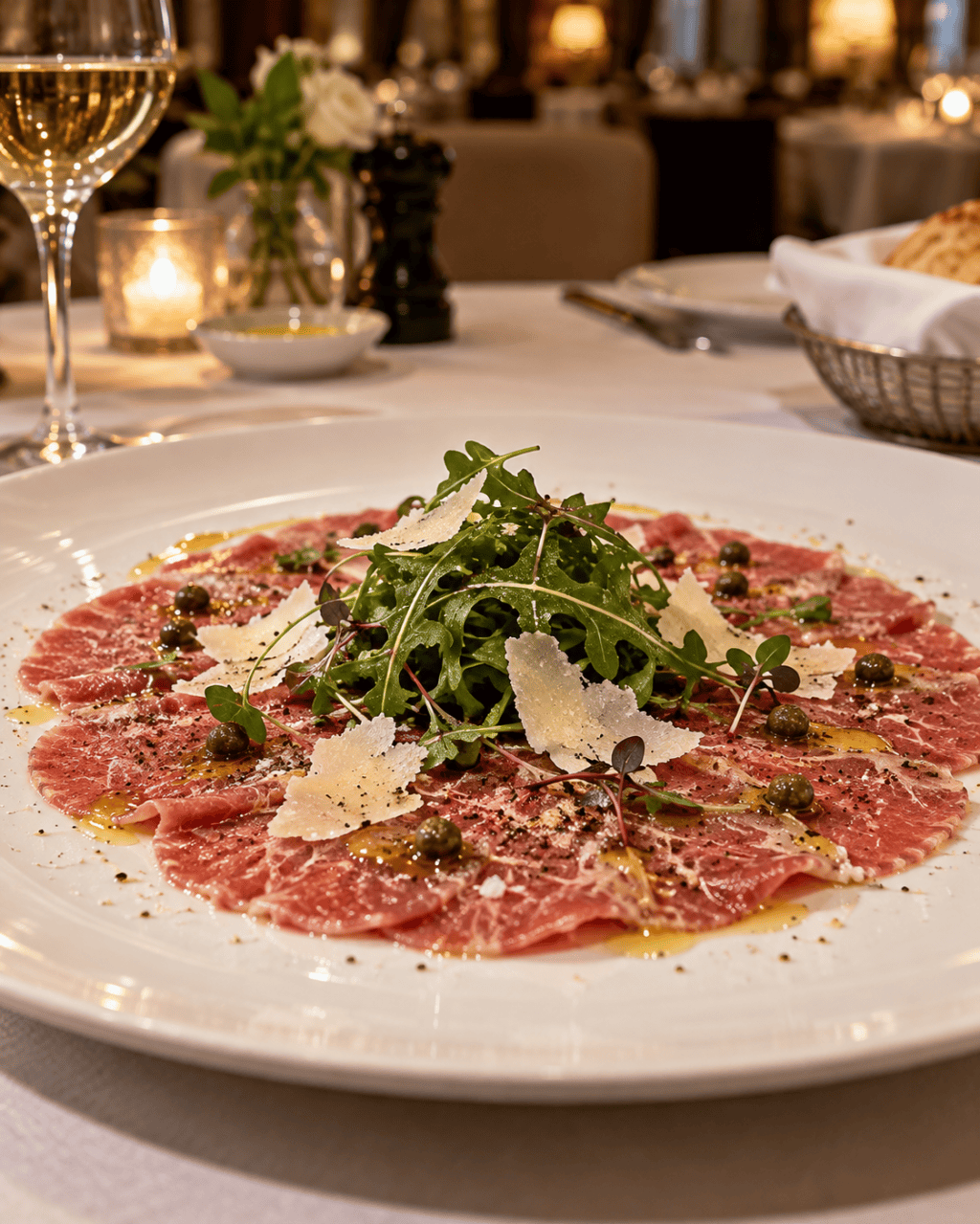
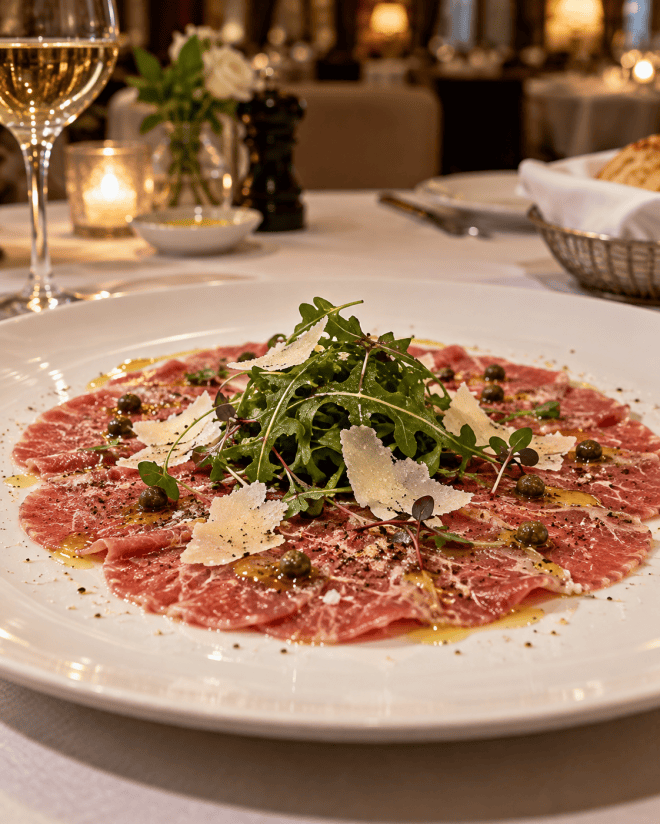
Paper-thin slices of beef tenderloin are arranged on chilled plates and finished with a bright lemon-Dijon dressing, peppery arugula, briny capers, shaved Parmigiano-Reggiano, flaky sea salt, and freshly cracked black pepper. The result is elegant, clean, and intensely beef-forward, with enough acidity and richness to complement the meat without overwhelming it.
Servings: 4 appetizer portions
Prep Time: 25 minutes
Chill Time: 1 hour 30 minutes
Total Time: 1 hour 55 minutes
Difficulty: Level 3 Moderate
Cost: Level 4 Premium
Region / Ethnic Origin: Venetian / Italian
Ingredients
For the beef
- 12 ounces center-cut beef tenderloin, thoroughly trimmed of fat and silver skin
- 1 teaspoon extra-virgin olive oil
- 1/2 teaspoon kosher salt
- 1/4 teaspoon freshly ground black pepper
For the lemon-Dijon dressing
- 3 tablespoons extra-virgin olive oil
- 1 tablespoon freshly squeezed lemon juice
- 1 teaspoon Dijon mustard
- 1/2 teaspoon Worcestershire sauce
- 1/2 teaspoon finely grated lemon zest
- 1 small anchovy fillet, finely mashed, optional
- 1/4 teaspoon kosher salt
- 1/8 teaspoon freshly ground black pepper
For serving
- 1 1/2 cups baby arugula
- 2 tablespoons capers, drained and patted dry
- 1/3 cup shaved Parmigiano-Reggiano
- 1 tablespoon extra-virgin olive oil
- 1 teaspoon freshly squeezed lemon juice
- Flaky sea salt, to taste
- Freshly ground black pepper, to taste
- Lemon wedges, for serving
Instructions
Prepare the beef
- Pat the beef tenderloin dry with paper towels. Rub lightly with the olive oil and season evenly with kosher salt and black pepper.
- Wrap the beef tightly in plastic wrap, shaping it into a compact cylinder approximately 2 inches in diameter.
- Place the wrapped beef in the freezer for 60 to 90 minutes, until very firm but not completely frozen solid.
Prepare the dressing
- In a small bowl, whisk together the olive oil, lemon juice, Dijon mustard, Worcestershire sauce, lemon zest, anchovy if using, kosher salt, and black pepper until emulsified.
- Taste and adjust the balance with additional lemon juice or olive oil if needed. The dressing should be bright and savory without tasting sharply acidic.
Slice the beef
- Place 4 serving plates in the refrigerator to chill.
- Unwrap the beef and, using a very sharp slicing knife, cut it across the grain into slices approximately 1/8 inch thick.
- Place each slice between 2 sheets of plastic wrap or parchment paper and gently pound with the smooth side of a meat mallet until paper-thin and nearly translucent, taking care not to tear the meat.
- Arrange the slices in a single overlapping layer over each chilled plate, covering as much of the surface as possible.
Dress and serve
- Lightly brush or spoon a small amount of the lemon-Dijon dressing over the beef. Use enough to season the meat without pooling on the plate.
- Toss the arugula with 1 tablespoon olive oil, 1 teaspoon lemon juice, and a small pinch of kosher salt.
- Place a small, loose mound of dressed arugula in the center of each plate.
- Scatter the capers evenly over the beef.
- Finish with shaved Parmigiano-Reggiano, flaky sea salt, and freshly ground black pepper.
- Serve immediately with lemon wedges and the remaining dressing on the side.
Cook’s Notes
Choose the best beef: Beef tenderloin is ideal because it is exceptionally tender and easy to slice. Use the freshest high-quality beef available from a trusted butcher.
Partial freezing is essential: Firming the beef in the freezer makes it much easier to cut very thin, even slices. Food Network preparations commonly use this technique before pounding the slices paper-thin.
Keep the beef cold: Chill both the beef and the serving plates. Assemble the carpaccio only shortly before serving.
Do not overdress: Carpaccio should taste primarily of excellent beef. The dressing, cheese, capers, and greens should support the meat rather than dominate it.
Anchovy is optional but recommended: A very small amount gives the dressing savory depth without making it taste fishy.
Parmesan matters: Use genuine Parmigiano-Reggiano and shave it thinly rather than grating it finely.
Food safety: Because the beef is served raw, this dish is not suitable for people at higher risk of foodborne illness. FDA guidance specifically advises higher-risk individuals to avoid raw or undercooked meat.
Serving Suggestions
Grilled Crostini: Thin slices of toasted baguette brushed lightly with olive oil make a crisp contrast to the tender beef.
Marinated Artichokes: Their acidity and herbal flavor pair naturally with the lemon, capers, and Parmesan.
Roasted Asparagus: A simple preparation with olive oil and lemon works especially well alongside the carpaccio.
Italian Antipasto Board: Serve the carpaccio as the centerpiece of a spread with olives, roasted peppers, artichokes, and crusty bread.
Beverage Suggestions
Prosecco: Its bright acidity and fine bubbles complement the raw beef without overwhelming it.
Pinot Grigio: A crisp, mineral-driven Italian white wine pairs especially well with lemon and Parmesan.
Barbera: A light-bodied, high-acid red offers enough structure for the beef while remaining refreshing.
Sparkling Mineral Water with Lemon: A clean nonalcoholic pairing that keeps the palate fresh.
Storage
Carpaccio is best prepared and served immediately.
Beef: Keep raw beef refrigerated at 40°F or below until ready to prepare. Do not leave the assembled carpaccio at room temperature for extended periods.
Leftovers: I do not recommend storing assembled carpaccio. Because the beef is raw and exposed, prepare only as much as will be eaten immediately.
Variations
Cipriani-Style Carpaccio: Replace the lemon-Dijon dressing with a thin sauce made from mayonnaise, Worcestershire sauce, lemon juice, milk, salt, and white pepper, echoing the original Harry’s Bar preparation.
Truffle Carpaccio: Add a few drops of truffle oil and replace some of the Parmesan with shaved black truffle when available.
Arugula-Free Carpaccio: Omit the greens entirely for a more austere Venetian-style presentation.
Seared Carpaccio: Briefly sear the exterior of the tenderloin over very high heat before chilling and slicing. This changes the dish from true raw carpaccio but adds a roasted flavor and reduces some surface exposure.


Leave a Reply