

Scotch eggs pair a tender egg with savory sausage and a crisp breadcrumb coating. This version uses a precisely controlled water bath to prepare the eggs before breading and finishing them. The texture of a low-temperature egg is softer than that of a traditional hard-boiled Scotch egg, so gentle handling is essential.
Recipe Information
- Prep Time: Approximately 30 minutes, plus chilling
- Cook Time: Approximately 1 hour for the eggs, plus finishing time determined by internal temperature
- Total Time: Variable, including chilling and final cooking
- Servings: 4 Scotch eggs
- Difficulty: Advanced (4/5)
- Cost: Moderate ($$$/$$$$$)
- Region/Ethnic Origin: British-inspired
Ingredients
- 4 large, fresh eggs in their shells
- 1 pound fresh ground pork sausage
- 1/2 cup all-purpose flour, for coating
- 1 large egg, beaten, for breading
- 1 cup panko breadcrumbs
- Neutral frying oil, as needed
Instructions
Prepare the sous vide eggs
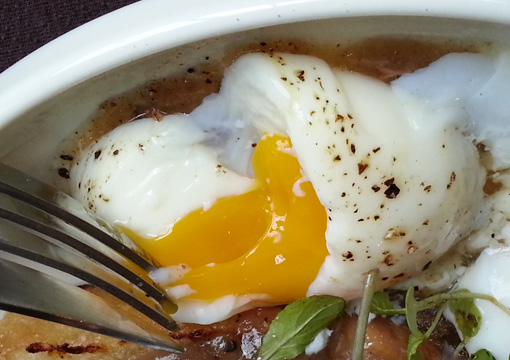
- Heat an immersion-circulator water bath to 147°F (64°C). Lower the four shell-on eggs gently into the water and cook for 60 minutes. This produces a delicate, low-temperature egg, not the firm white of a traditional boiled egg. Use clean, uncracked eggs.
- Transfer the eggs promptly to an ice-water bath until thoroughly chilled. Refrigerate at 40°F (4°C) or below if not assembling immediately. Do not treat this cooking step as proof of extended refrigerated shelf life.
- Peel the chilled eggs carefully. The whites will be fragile; work over a bowl and discard any egg that breaks apart beyond repair. Do not freeze the eggs to compensate for the delicate texture.
Wrap and bread
- Divide the sausage into four equal portions. Flatten each portion between sheets of parchment into a thin, even round large enough to enclose an egg completely.
- Working with cold eggs and sausage, gently wrap each egg in sausage, sealing the seams without leaving gaps. Keep the assembled eggs refrigerated while you prepare the coating.
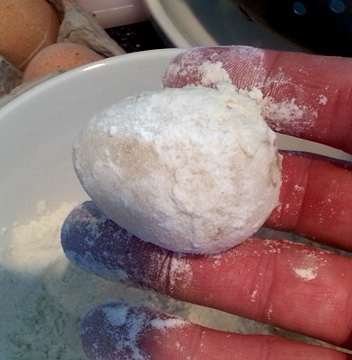
- Dust each sausage-covered egg with flour, dip in beaten egg, then coat evenly with panko breadcrumbs.


Cook and serve
- Heat a deep-sided pan with sufficient neutral oil for shallow frying to approximately 350°F (177°C). Fry the coated eggs in small batches, turning carefully until the crumbs are golden brown. Browning alone does not mean the sausage is cooked through.
- Transfer to a rack over a baking sheet. If the sausage has not reached its safe temperature, finish in a preheated 350°F (177°C) oven, checking with an instant-read thermometer inserted sideways into the thickest part of the sausage coating without touching the egg. Cook ground pork sausage to at least 160°F (71°C); if using poultry sausage, cook to at least 165°F (74°C). Check more than one location when possible. Cooking time varies with thickness and starting temperature.
- Serve immediately once the sausage has reached the required temperature. Do not hold cooked Scotch eggs at room temperature for hours. The egg center may firm further during the final cooking needed for the sausage.


Cooking note: ChefSteps’ low-temperature egg guidance explains that egg whites cooked around 147°F remain softer than traditionally cooked whites. This makes the eggs delicate to peel and wrap. The final sausage temperature—not a fixed frying time—determines when these Scotch eggs are ready to serve.


Leave a Reply